Thursday, 4 April 2024

Up, Up and Away

Last May, for my Birthday, we booked a family balloon trip over Melbourne.  Bad weather, bad luck and busy lives conspired to take us almost a year to be able to make the flight.

All four of us travelled into East Melbourne in the wee hours of the morning yesterday, to be collected and taken ballooning.  It was dark when we got up, and still dark when we arrived at the take off point.

None of us had ever been up in a balloon before, so it was all a bit exciting.  

The nature and route of the journey is controlled by the direction the winds are blowing - and its only possible to steer by finding wind blowing in the direction you want to go.

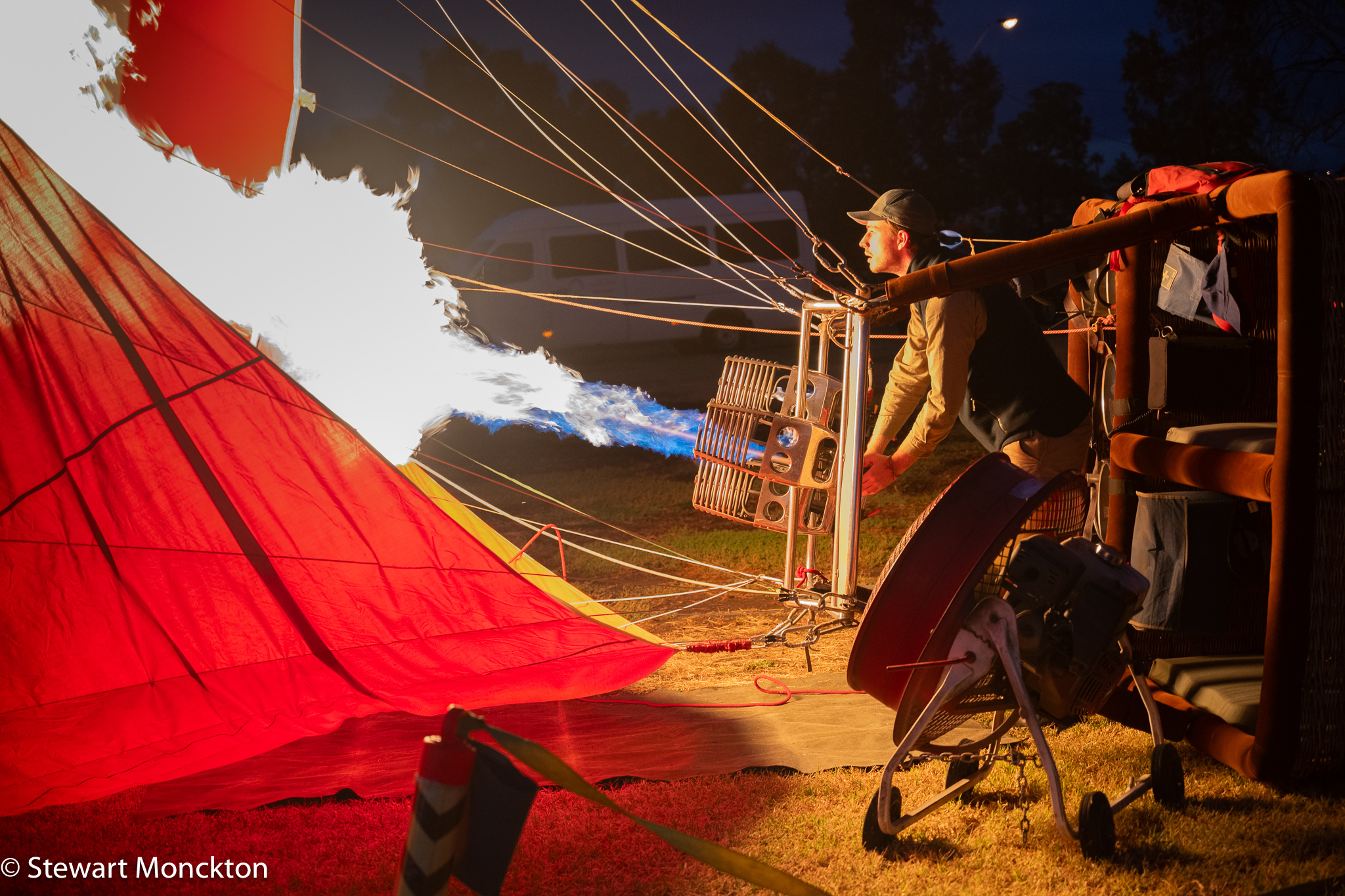
The first stage of the journey involved unpacking and then inflating the balloon.  The first stage of inflation involves blowing air into the balloon with a huge fan, and only after the balloon is partially inflated are the burners used to add hot air.


About to start filling the balloon with air from the fan

The balloon was very big!

Adding some hot air.

More hot air

Once the balloon itself floated upright, we all had to get into the basket to act as ballast!  More hot air was then blasted in.


Eddie, the pilot, did a few pre-flight checks, and then we took off.  Silently. Straight up.

Of course, many of the pictures that follow are not of our balloon, but of some of the others that flew with us. 


Melbourne is huge!  And seeing like this was really rather remarkable.

One of the surprising things about being in a balloon is that there is no wind - as Eddie said, 'you dont feel the wind, because you are the wind!'  There was only an occasional breeze when you moved between air masses that were moving in different directions.

We flew over some rather iconic landmarks - none more iconic in Melbourne than the MCG.

St. Paul's Cathedral 

CBD

Fed Square and the City

Centre Square, MCG

The MCG.  (The pink lights on the side are to help the grass grow.) And the balloon pilot gave the balloon a nice glow with the burners!

Looking back at Richmond and the City

Finally we passed over the city and landed on a sports oval.  I have to say, I have had bumpier landings in a conventional airplane!

Handbrake on!

Just as we landed, Eddie opened the 'hand brake' on the ballon.  It's a huge hole at the top of balloon that vents all (well most of) the hot air from the balloon and reduces its buoyancy. 

And down.

Back on the ground, we deflated the balloon, packed it into a bag - think about putting the worlds largest sleeping bag into a sac, and went for breakfast!

What a great morning!  SM


Wednesday, 3 April 2024

Wild Bird Wednesday 610 - On Crake Pond

Last week I ventured yet again to Werribee Sewage Works - and I knew that the specific combination of time of the day, weather, and time of year would mean that the early morning light on 'The Crake Pond' would be good.

If you are amongst the band of merry birders that I have taken around Werribee, the Crake Pond is often the first place we stop - and it's justifiably famous for its crake sightings.  And while none of the less abundant crakes showed up, the pond did not let me down.

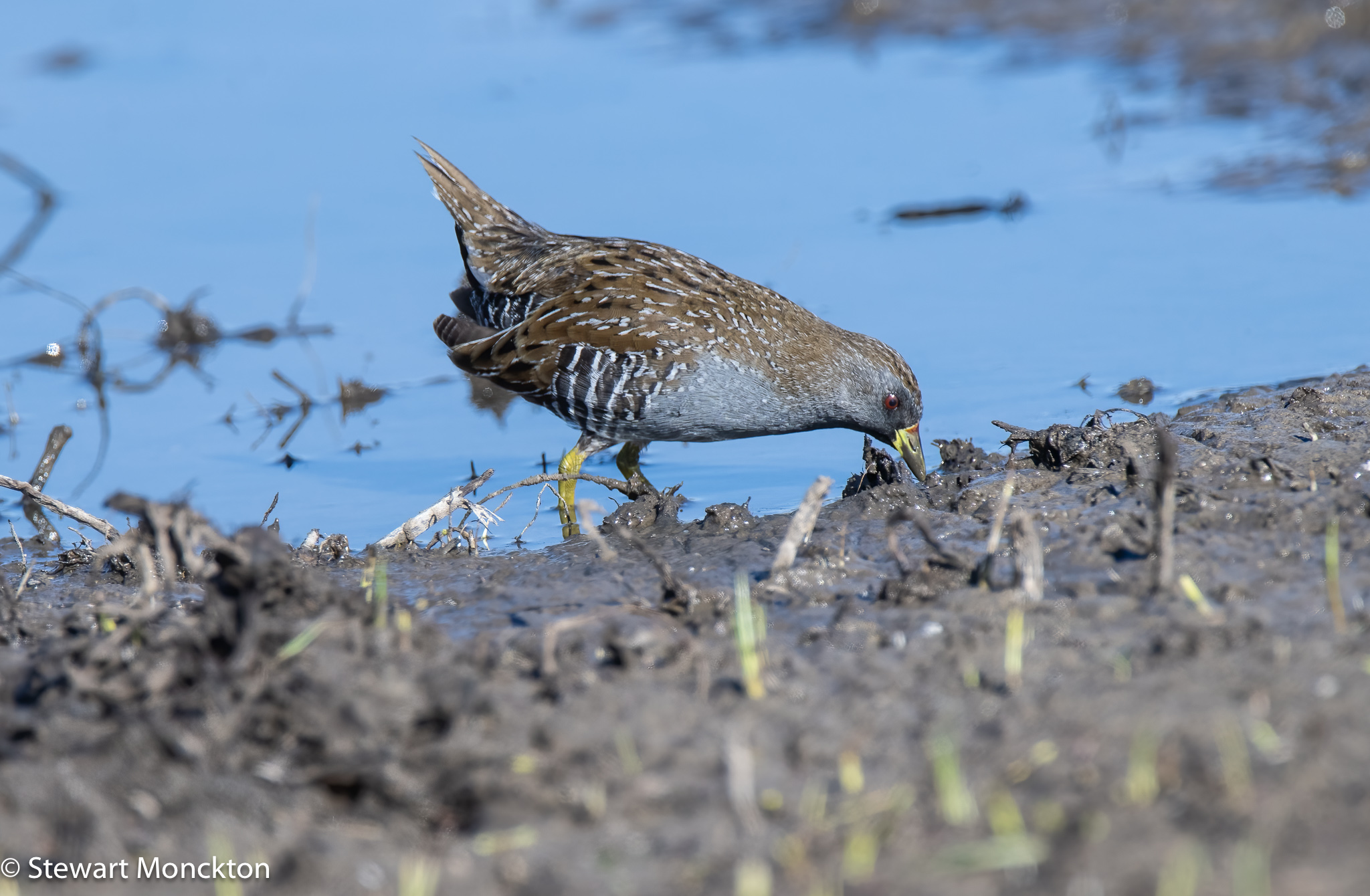
As I arrived I could see at least one Australia Spotted Crake / Australian Crake (Porzana fluminea) feeding on the mud.  So, I backed the car away from the pond, got my camera and flask of tea ready, and then drove back to a vantage spot.   As is often the case, I stayed in the car - using it as a hide / blind - and supported my camera and lens on a bean bag filled with barley seeds.  It's a simple but very stable method.

These are some of the birds I saw:

Australia Spotted Crake / Australian Crake (Porzana fluminea) 


Red-kneed Dotterel (Erythrogonys cinctus)


Black-fronted Dotterel (Elseyornis melanops)


Sharp-tailed Sandpiper (Calidris acuminata)


and the Buff-banded Rail (Gallirallus philippensis).


Not my usual single species posts - but there you go.

To join in with WBW click the link below.  And to be shown around Werribee, come visit Australia!

Cheers,  SM.


You are invited to the Inlinkz link party!

Click here to enter

Wednesday, 27 March 2024

Wild Bird Wednesday 609 - American Robin

Following on from last week's post about the European Robin, this week we have the American Robin (Turdus migratorius).  This Robin is a Thrush, and as the second part of its scientific name suggests, it migrates!

I saw this bird in Ontario, which I think is more or less at the northern edge of its year round range.  As you go further north in Canada this species becomes a summer visitor.

You can certainly see why this bird was called a Robin!


As ever, to join in with WBW click on the link below.  SM

You are invited to the Inlinkz link party!

Click here to enter

Wednesday, 20 March 2024

Wild Bird Wednesday 608 - European Robin

The European Robin (Erithacus rubecula) has never been known to me as anything other than just a Robin.

As long term readers will know, I do like a story about the names of birds - and this species has a number of stories attached to it.  One of the traditional names for this species is Robin Redbreast.  Even a casual glance at the pictures below will reveal that it is in fact an 'orange-breast'.  This inconsistency has come about (apparently) because the name Redbreast was given to the bird before the colour orange had been given a name!  Orange seems to have only appeared as the name of a colour in English when the fruit arrived in the country.

Equally interesting is the idea that this is the 'original' robin in terms of its name - but not taxonomy - and in regions that were settled / colonised by the British any bird with a red (or orange!) breast was called a Robin.  Hence North American Robins, and the Robins of Australia.  None of these birds are particularly closely related despite the similar common names.

I found this Robin at Ham Wall RSPB reserve in Somerset. It's a common bird in the UK, but it is demonstrating its calm demeanour around people which is only found in the species in Ireland and the UK. This is different to the behaviour of the species in Continental Europe, where the bird is shy and timid of people.   In the UK Robins will often forage in freshly turned garden soil, often as the gardener is still digging close by.  In the rest of Europe the bird heads for cover at the sign of people.

One explanation for this its that Robin have never been much of a target for hunters in the UK.  The same cannot be said for the rest of Europe.  I have to say, I hope this explanation is true!


As ever, to join in with WBW click on the link below.  SM

You are invited to the Inlinkz link party!

Click here to enter

Wednesday, 13 March 2024

Wild Bird Wednesday 607 - Zebra Dove.

WBW is brought to you this week by a more conventionally coloured pigeon type bird than last week's bird!

This is a Zebra Dove (Geopelia striata) and it was sunning itself on a branch outside the town of Ubud in Bali, Indonesia.

The  Zebra Dove is a small, grayish brown dove with dark bars on the breast and back, and bare blue skin around the eye. The call is a rapid series of short “coos,” - ie it sounds like most doves! This species is native to Southeast Asia, but has been introduced elsewhere. It is generally quite abundant throughout both its native and non-native range, especially in urban and suburban areas: and this is exactly where I saw it!


As ever, to join in with WBW click the link below. Cheers  SM

You are invited to the Inlinkz link party!

Click here to enter

Wednesday, 6 March 2024

Wild Bird Wednesday 606 - Gray-cheeked Green-Pigeon

The Gray-Cheeked Green-Pigeon (Treron griseicauda) is a species that is endemic to Indonesia, although it is only found on Sulawesi, Java and Bali.  It is considered 'fairly common' in the lowlands of Bali, and this is where I photographed these birds.

This species is described as having a 'comical' eye ring - and I can understand what this means.

Although I never managed to photograph them we could see this species in the trees around our accomodation, where they were feeding on fruit in the canopy of tall fruit trees.

By pigeon standards, this is small bird -  only 26 cm long.


As ever, to join in with WBW just click on the link below.  SM

You are invited to the Inlinkz link party!

Click here to enter