Wednesday, 9 November 2016

Wild Bird Wednesday 224 - Azure Kingfisher

Kingfishers are without question spectacular - even when they sit in rather dull light!

This is an Azure Kingfisher (Ceyx azurea) which we got wonderful views of within a few minutes of starting an evening cruise on Yellow Waters in Kakadu National Park.  The views we got of this bird were the best that I have had of this species, despite it being found all the way down the east coast of Australia.

The bird is between 17 and 19cm long and really is a spectacular bird to see.  (Some of the pictures are a bit 'soft' due to me not having my act together at the time - rule number 1; always check the settings!!)


Now its over to you - click the blue button to join on with Wild Bird Wednesday.


Tuesday, 8 November 2016

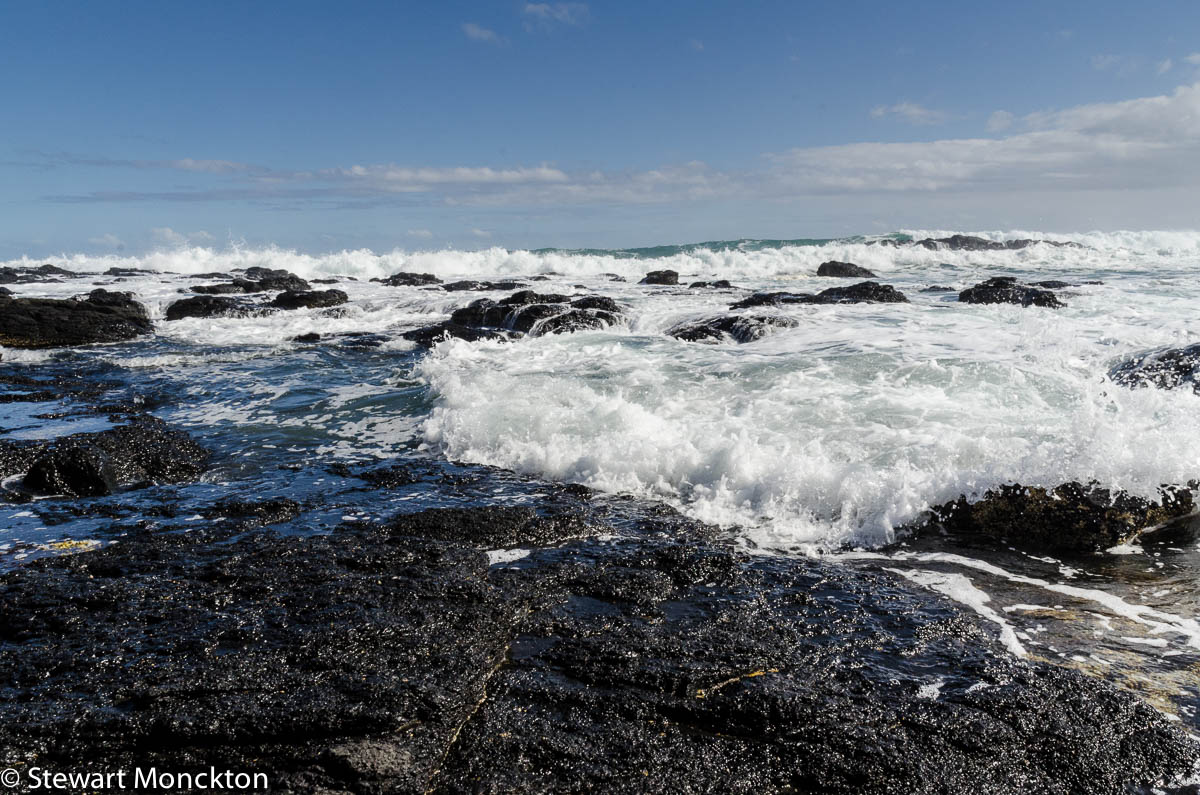
Seascapes near The Blowhole

We had a long weekend recently, so we took the opportunity to have a short break away by the sea.  From Melbourne you can go east of west to get to long areas of coast - and this time we went east to the Mornington Peninsula.

These are some shots from near a place called The Blowhole, which is near Flinders in the Mornington Peninsula National Park.  The tide was too low and the waves too small for the hole to blow, but it was a good place even if it did not live up to its name!


You can find more shots from around the world at Our World Tuesday.


Friday, 4 November 2016

Sky View

These are views of the sky taken from inside a sculpture / space called Within Without, at the National Gallery of Australia.

The view of the sky is taken out through the 'roof' of the central tower or tall dome.  When you sit inside this tower, the view of the sky almost feels like it is actually a sphere - and that you are looking at a sky patterned ball rather than the sky itself.

It was a wonderful and strange experience.


The 'blue section' in front of the tower is full of water - and you just can't resist splashing it - well, I could not resit it!

You can find more skies by jumping over to Sky Watch Friday.

Wednesday, 2 November 2016

Wild Bird Wednesday 223 - Darter

Darters are a fish eating bird that can be found over most of Australia - they tend to be absent from the dryer areas, for obvious reasons.

When I say that they are fish eating - what I should probably have said is that they are reputed to be fish eating, as it has taken me a rather long time to get any photographic evidence of this activity!

The first set of pictures were taken at Mamukala Bird Hide, and show really well that these birds feathers do not have the same water repelling oils applied to them as other birds.  If these were pictures of ducks you would see water 'beading' all of the feathers on the back of the bird.  As you can see this Darter looks soaking wet.  This is an adaptation to diving under water, as it makes the bird less buoyant.

This bird is also know as the 'Snake Bird' - and when its body is underwater, and all you can see is the neck and head, you can see why.  The formal name - Anhinga novaehollandiae - means New Holland Devil Bird.  The New Holland being an old name for Australia, and the Devil Bird being based on the name given to very similar birds that were first seen in South America.


The second set of pictures, where a different bird has caught what seems to be a small cat-fish were taken during an evening tour of Yellow Water, a justifiably famous location in the Kakadu National Park.


Now its over to you - click the blue button to join on with Wild Bird Wednesday.  


Tuesday, 1 November 2016

Table Top Swamp

I often think it says a great deal about that past when you visit a place called a 'Swamp' and it turns out to be stunning!  Swamp seems such a negative name - but I suppose there were for more place that had not succumbed to concrete and development when they were named 'Swamp'.

These pictures are from Table Top Swamp in the Litchfield National Park.  This swamp is, rather surprisingly, at the top of hill!  It sits in a depression in a large stoney plateau, and all the water in the swamp comes from rain fall as no rivers flow into it.   This swamp fills during the wet season, and shrinks in the dry.  We visited towards the end of the dry, and you could see large areas around the 'pond' that had clearly been underwater recently.

It was a rather splendid place.


You can find more shots from around the world at Our World Tuesday.

Wednesday, 26 October 2016

Wild Bird Wednesday 222 - Red-collared Lorikeet

I thought I'd go with a bit of colour this week.  Red-collared Lorikeets are very closely related to the insanely colourful Rainbow Lorikeets, and in fact until recently they were considered a sub-species of of Rainbow Lorikeet rather than a full species in their own right.

So, the Red-collared Lorikeet (Trichoglossus rubritorquis) is only found in the wooded areas of Northern Australia.  The first part of the formal name refers to the birds 'hairy tongue' which it uses to feed on nectar and pollen.  This is probably what the birds in the pictures are doing.

These birds were rather distant when I took the pictures, but the images really do show what you can do with a few megapixels and a bit of sensible cropping.  These pictures were taken near the Mamukala bird hide in the Northern Territory.

Although I would have loved to get some real 'screen filler' shots of these birds, I do rather like the way you can see these birds in the habitat.


These picture really do need to be looked at in 'full screen' mode, which will happen if you click on the image.

Now its your turn to join in with 222nd Wild Bird Wednesday by clicking on the blue button below.  SM