Wednesday, 18 December 2019

Wild Bird Wednesday 387 - Radjah Shellduck

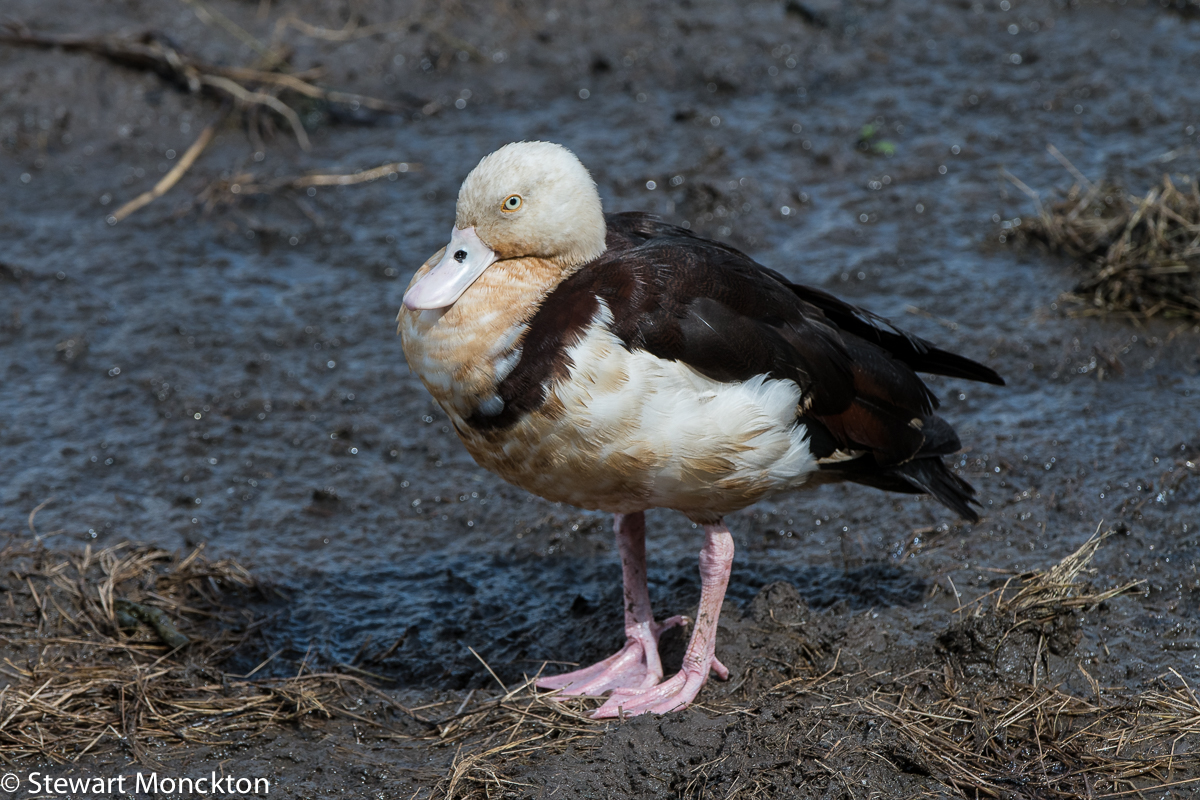
The Radjah Shellduck (Tadorna radjah) is a common resident of the top end of Australia.  One of its characteristic features is the pale colour of its beak and legs.

The name of the this duck does not seem to have any real meaning! It was first named in 1839, where it was proclaimed to be a 'pretty' species (which is true!) and was given the name 'rajdah' as part of its formal name.  It seems the common name comes from that choice.  It has an alternative common name - The Burdekin Duck - which refers to an area of country where they can gather in large numbers.

These birds were seen at Bitter Springs and the Mamukala Wetlands.  Juvenile birds show a 'dirty head and neck' - but I think the bird with brown on it is just in need of a wash.  And if you look at where it is standing, this is no surprise.


As ever, you can join in with WBW by clicking on the link below - and also as ever, please feel free to share WBW with other bloggers.   SM  


You are invited to the Inlinkz link party!
Click here to enter

Tuesday, 17 December 2019

Some pictures from Paris

Christmas is winter does really feel appropriate - even after 25 years in Australia, hot weather (and it is really, desperately hot there at present) at Christmas seems wrong!

So, I've headed North - and here are a few pictures from my wanderings around the streets of Paris.  And wandering is what I have had to do as there is a transport strike on at present.  No Metro!


You can find more shots from around the world at Our World Tuesday.   As we approach a busy time of year replies may be a bit slower than normal!  Cheers  SM

Wednesday, 11 December 2019

Wild Bird Wednesday 386 - Pied Heron

The Pied Heron (Egretta picata) is a small heron found in areas close to the coast of Northern Australia.  It's also found on some of the islands to the north of Australia.

This bird is about 50cm long, and the grey/blue cap and crest show that it is an adult bird.  This bird was feeding in the shallow water on a very hot day at Mamukala Wetlands in Kakadu National Park.

As you can see from some of the pictures - there were a good number of bird about that day.


As ever, you can join in with WBW by clicking on the link below - and also as ever, please feel free to share WBW with other bloggers.   SM  


You are invited to the Inlinkz link party!
Click here to enter

Monday, 9 December 2019

Croc Attack

While we were at a place called Cahills Crossing, which is a crossing point on the East Alligator River in the Northern Territory, we heard a large 'book' from the river, and immediately saw a large ring of splashes and ripples just down the river from us.  We were on a high bank above the river, so were in no danger.

An estuarine / saltwater crocodile had just caught a large catfish of some sort and was mincing it up with a rather impressive set of teeth.  Cahills Crossing has a bit of a reputation for being unsafe at times due to a combination of large numbers of fish, and hence fisherfolk, and crocodiles.  Add beer and boats and its a recipe for disaster!

Luckily as far as we could tell, the only casulty on this day was the Catfish!  Just as a reminder, this is a wild crocodile, not one of the 'trained' jumping crocs that you see on some tours.  It was, to say the least, impressive!


You can find more shots from around the world at Our World Tuesday.   As we approach a busy time of year replies may be a bit slower than normal!  Cheers  SM


Tuesday, 3 December 2019

Wild Bird Wednesday 385 - Splendid Fairy Wren

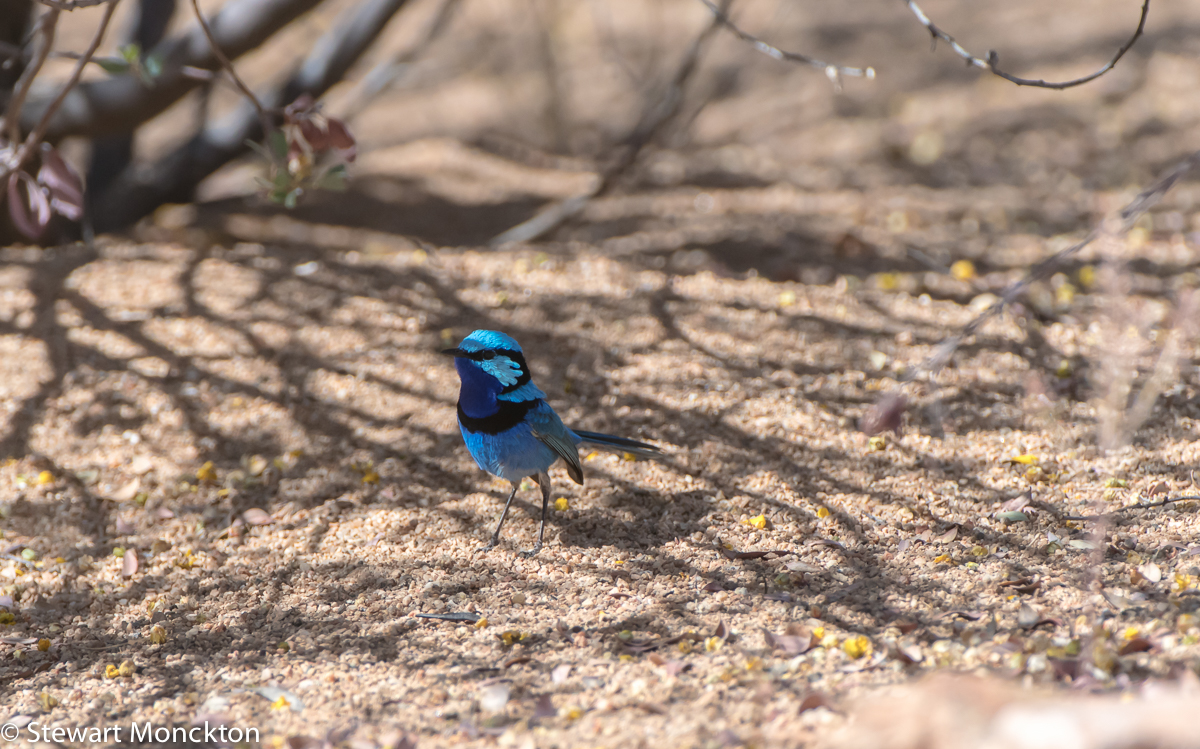
This rather splendid little bird is in fact a Splendid Fairy Wren (Malurus splendens) from Alice Springs in central Australia.

This bird was feeding around some table in the cafe area of the Desert Park - and at one time was sitting on the table in front of me all of 30cm away.  This was one for the few times I have had too much lens when photographing small birds!

This bird seems to occur in 3 distinct areas, with a population in Western Australia, one on Central Australia and the third just clipping the NW of Victoria and going up through NSW and Queensland. I had never had a chance to photograph this bird before.

I would have liked to have sat and waited for this bird - and a far more nervous female - to present themselves in a little better light.  But, alas I had to leave.


As ever, you can join in with WBW by clicking on the link below - and also as ever, please feel free to share WBW with other bloggers.   SM  

PS: I can feel the frenzy of the approaching season already! 

You are invited to the Inlinkz link party!
Click here to enter

Tuesday, 26 November 2019

Wild Bird Wednesday 384 - Diamond Dove

The Diamond Dove (Geopelia cuneata) is Australia's smallest dove, being about 20cm long. It is found over most of the drier and northern parts of Australia.  The red eye-ring and the 'diamonds' on the wings help with identification.

As with a good number of recent WBW posts I took these pictures in the Desert Park in Alice Springs.  This was the first time I have had a change to photograph this species.


This bird (all the pictures are of the same individual) was dashing about looking for seeds.  It was a rather splendid little bird.

As ever, you can join in with WBW by clicking on the link below - and also as ever, please feel free to share WBW with other bloggers.   SM


You are invited to the Inlinkz link party!
Click here to enter